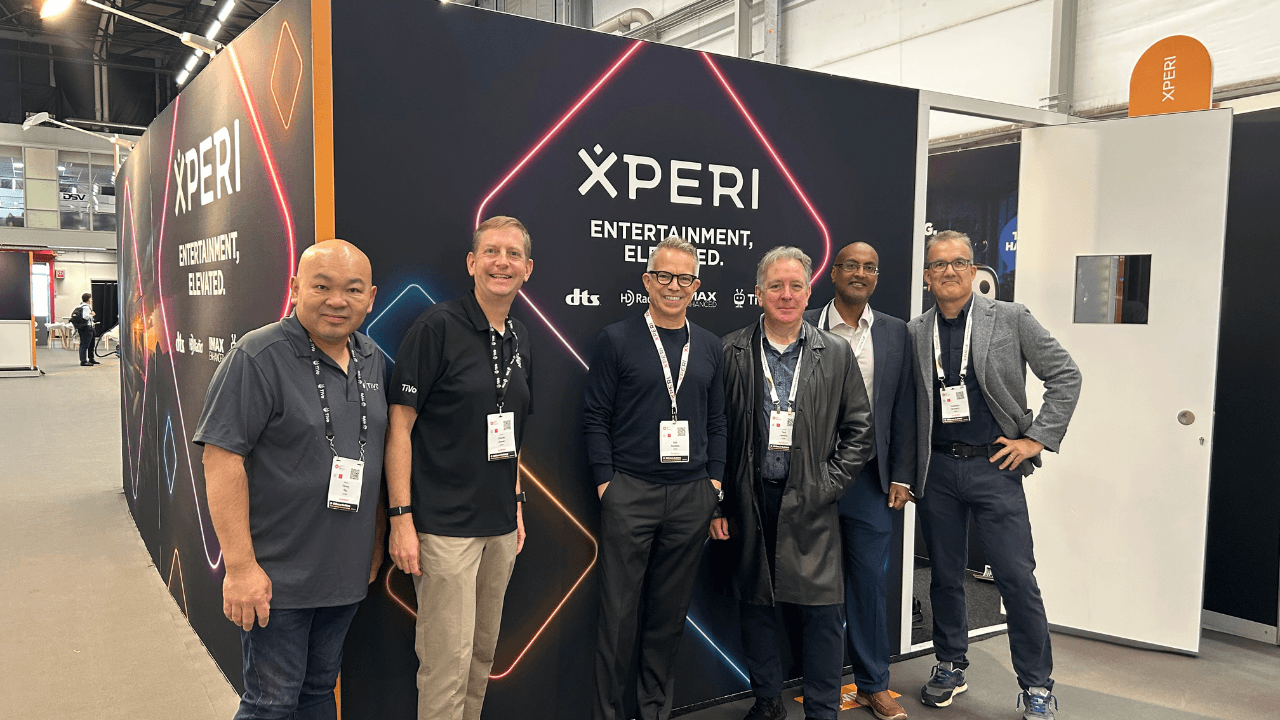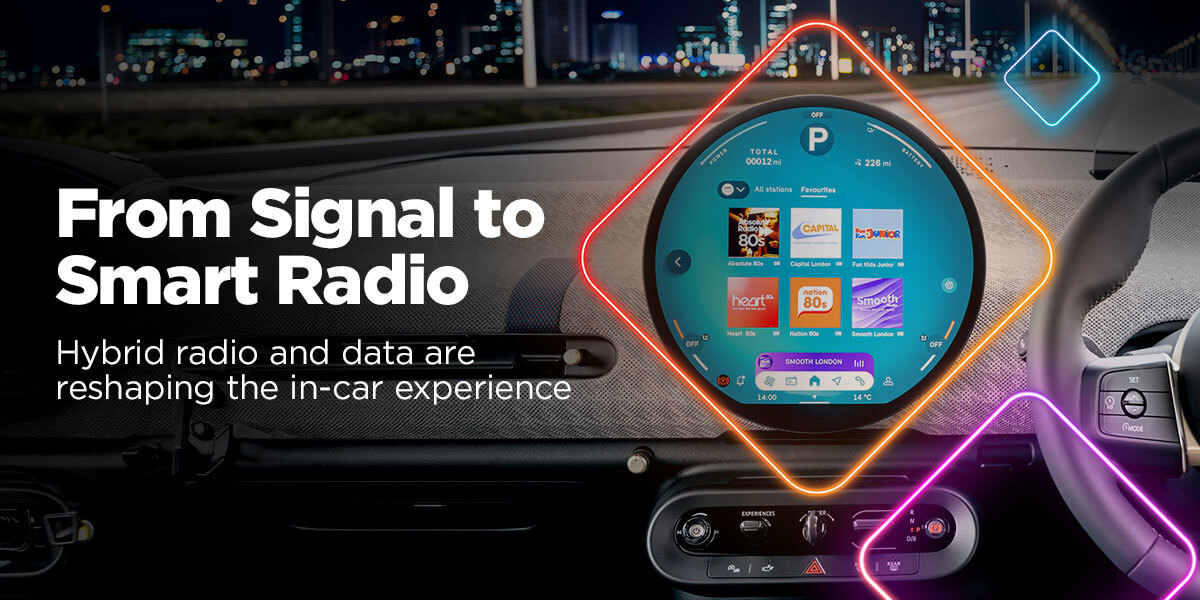
At WorldDAB Automotive this year, much of the discussion focused on how radio fits into a dashboard that’s becoming more crowded and more complex. Cars are changing fast. The dashboard is now a software-driven experience, not just a set of buttons and presets. And that means radio is no longer competing with other stations; it sits alongside streaming apps, voice assistants and integrated entertainment platforms. The question is simple: how does radio stay visible and worth choosing?
From radio signal to user experience
Radio has always worked in the car because it’s easy. You turn it on, and it plays. The simplicity still matters. But expectations have evolved. Today’s drivers expect clear navigation, rich visuals and content that’s easy to discover. A signal alone is no longer enough.
Why hybrid radio matters
This is where hybrid radio comes in. By combining broadcast (like DAB+) with IP, hybrid radio keeps what already works while adding what’s been missing—data, flexibility and a better way to present content.
As Gereon Joachim, VP Automotive Sales & Strategy EMEA at Xperi, said during the session, “When you combine broadcast and IP, you create a much more powerful experience—one that works seamlessly for the user and unlocks real value for broadcasters.”
Better visibility, real data
One of the more important changes in the connected car is visibility—not just for users, but for the industry. Broadcasters can now see what’s happening in the dashboard:
- what people are listening to
- how they move between radio and other sources
- where engagement drops
That changes how decisions are made. Instead of relying on delayed reports or assumptions, there’s an opportunity to react faster and adjust based on actual behavior.
As George Cernat, Senior Director Automotive Connected Media at Xperi, put it: “The connected car allows us to move from simply delivering signals to actually understanding how content performs and acting on that insight.”
Bringing it together with DTS AutoStage™
This is where DTS AutoStage comes in. It brings broadcast and IP into a single, consistent experience that works across vehicles and markets without adding complexity for the user.
That includes:
- enriched radio with logos, artwork and program information
- seamless switching between broadcast and streaming
- a clearer, easier-to-navigate interface
The aim isn’t to change what radio is. It’s to make sure it works naturally in a modern dashboard—and stays easy to find.
Value across the ecosystem
The impact goes beyond the interface. For broadcasters, it means:
- stronger visibility in the dashboard
- seamless switching between broadcast and streaming
- a clearer, easier-to-navigate interface
For automakers, it means:
- a proven way to combine broadcast and IP
- less integration complexity
- a more complete in-car entertainment offer
For listeners, the experience stays familiar but works better.
Keeping radio simple
Radio still works today for a reason, and that shouldn’t be lost as the experience evolves.
It still needs to be immediate and easy to use. The challenge and the opportunity are adding capability without adding friction. That balance is central to how AutoStage is designed.
Where the industry goes from here
This shift won’t happen on its own. Broadcasters, automakers and technology providers all have a role to play in shaping how radio evolves in the car. The goal is shared: keeping radio visible, easy to use and competitive within a much broader digital environment.
Radio, but smarter
Radio isn’t going away, but it is changing. Hybrid delivery, better data and platforms like DTS AutoStage give the industry what it needs to adapt. The focus now is on making the most of those tools, so radio keeps its simplicity, while becoming far more capable behind the scenes. Watch the session recording here: