I was recently listening to a former radio/TV host, whose cable show had been cancelled, as she discussed the benefits of her new streaming show compared to traditional media. She explained that in her earlier days in radio, she was used to listener metrics based on estimates gleaned from what people recorded either in a diary or through a more sophisticated portable electronic device that recognized and tracked exposure to specific radio programming. One of the key advantages of new media, she noted, is that “the numbers are the numbers,” offering transparency on the who, where, when and what of the audience. This precision not only strengthens advertising opportunities but also helps determine which content the audience cares about.
For 75 years, radio listenership has been ranked and measured across a limited number of markets, through a limited sample of listeners, over a period of weeks, then analyzed and extrapolated to create station rankings, with reporting delivered weekly, monthly or quarterly. This has been the basis for both programming decisions, media planning and advertising performance, which is the lifeblood revenue for broadcasters. While this method has mostly worked and continues to be an important standard for determining ad spend, today’s fragmented and increasing local media landscape means the demand for precision targeting and attribution — based on timely, actionable information — challenges this approach.
These rankings cover only a fraction of the over 15,000 radio stations in the U.S., which means that for much of radio’s important localized content, there is no industry measurement, resulting in ‘data deserts’ for those stations. And, even though most of the 225 million people listening to radio every day are doing so outside the home (mostly in the car), traditional methodology provides little geographic context about the audience member on the go. As a result, there is no accounting for a listener who may have moved out of the station’s local broadcast area, but is still capturing that broadcast in an adjacent market.
Until now, broadcasters have been dependent on rankings crafted for only the largest and mid-size radio markets resulting in a variety of data deserts that impinge on true, transparent and unified measurement for all markets. The good news is that new technology means radio is poised for its Big Data moment, solving this issue.
Small sample size
One of radio’s most significant data limitations has resulted from less than ideal sample sizes, especially compared to the scale of online measurements, which is, importantly, one-to-one. It is, of course, challenging to reproduce this kind of specificity and scope over the air (OTA), which is why traditional rankings have been so dependent on the human factor, but the samples are limited to people who are willing to record their listening habits. As an example, an estimated <2,000 people in the Miami market dictate how radio is programmed and sold for hundreds of thousands of listeners. Imagine expanding that universe to digitally tracking in-vehicle radio listenership in the 96,000 vehicles across the entire Miami market that have that capability.
Demographic misrepresentations
Recently, a hip hop radio station in a Florida metro market reported that its traditional rankings showed a precipitous decline, from #2 to #20. What were they losing to? A talk/news radio station. Now, there seems to be a disconnect here, that a demographic that usually opts to escape into music, in this case hip hop, is unlikely to suddenly change taste to the insistent discord of talk news radio. It is very challenging to know exactly what was behind this sudden change in behavior.
What if, instead, tens of thousands of vehicles were recording listenership? With numbers that big, the data is likely to have shown that hip hop wasn’t suddenly taking a backseat to talk news in that specific broadcast area. This is an issue that we see happening over and over again. But at least that market had some traditional measurements. What about markets that are simply too small to make it into traditional national standard rankings?
Small markets left out in the cold
Recently, Muscle Shoals, Alabama, famous for the ‘Muscle Shoals Sound,’ home of Sam Phillips, and where some of the best music ever was recorded (Lynyrd Skynyrd, U2, Rolling Stones, Aretha Franklin, Bob Dylan to name a few), was dropped from the nationally-recognized traditional rankings, meaning that their audience share, GRP data, etc. were no longer represented in this fabled location, shutting them out of national rankings.
Another example is Winter Haven, Florida, a retirement community, where, over time, the ranking sample audience aged and departed this earth, but the diaries didn’t. Neither the remaining older people nor the younger cohorts were interested in filling out diaries, so Winter Haven was also shut out of the rankings.
And these are just two examples of data deserts – or data gaps – among the many small markets that not only lack nationally recognized independent third-party validation, but a window into listener behavior that, on a local level, can fuel programming and ad sales success.
Audiences in motion
The majority of radio listening is happening in the car, yet today’s traditional rankings measure listenership only where it historically has taken place — in the home. Imagine if you could literally follow your listener out the door into the car? For example, if a radio station in Syracuse receives information that a good chunk of its audience is listening in-vehicle in nearby Ithaca, wouldn’t it make sense to pitch an ad campaign for a local ‘Two Guys from Italy’ pizza parlor in Ithaca as well as for their store in Syracuse?
With the ability to measure listeners on the go, a radio station could offer local brick and mortar businesses evidence that many of the vehicles driving nearby are tuned to its radio station. Or, what if a station broadcasts in an area that doubles its local population during the summer months and peak weekends, such as Monmouth County’s Shore Region in New Jersey? Wouldn’t that station want all those out-of-towners listening in their cars to be reflected in any rankings of its listenership? And they would want to have that information sooner rather than later…which brings me to another data desert for broadcasters: delayed feedback.
Data processing challenge: Time
Traditional rankings can take weeks, months or even half a year to get back to broadcasters, too late to build on immediate successes or assess if listeners’ taste/feedback is changing. Furthermore, that measurement is often depicted as an estimated ‘average’ week versus the actual weeks.
Digital innovation has meant that online sites are able to understand consumption in real time, but this has previously been inaccessible to the OTA universe. If a program director is doing a stunt, a celebrity interview, a live remote, and/or a promotion, seeing performance the next day, rather than in three months, (whether the effort revved up or revved down), would enable rapid decisions on whether to end the effort or double down — and this is exactly what in-vehicle listening data can provide.
Lack of transparency
The final data desert? A profound lack of transparency — stations are unable to see, on a daily basis, where or when their listeners are consuming specific content, who they are and, importantly, how all those metrics stack up against all the other stations in their extended area. Going back to the Miami example, just imagine how comprehensive a window 96,000 radio listeners could provide about the overall radio landscape.
Radio’s big data moment
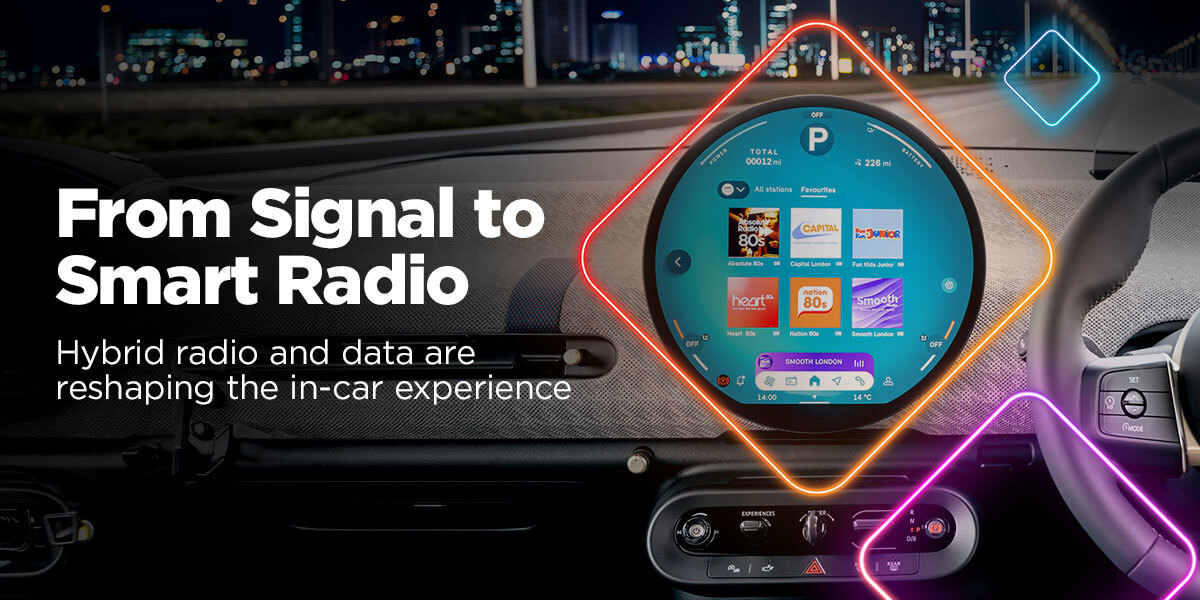
Of course, I wouldn’t be talking about all these data deserts if there weren’t a big oasis on the horizon, to the tune of about 16 million vehicles worldwide, primed to tell today’s radio listening story and, yes, solve its data deserts. Enter the DTS AutoStage Broadcaster Portal Premium: a new industry standard for radio intelligence — for the number of markets covered, the number of listeners analyzed within each market, and the specificity and timeliness of that data.
DTS AutoStage Broadcaster Portal Premium
DTS AutoStage Broadcaster Portal Premium is built on our DTS AutoStage platform, which is now integrated into more than 16 million vehicles globally, measuring more than 35 million in-vehicle AM/FM listening hours monthly in the U.S. alone, offering a scope of radio listening data and analytics previously unimagined. With access, for the first time, to competitive station rankings by daypart, delivered in near real-time, as well as expanded music charts, and full data export capabilities, broadcasters can now digitally measure their audience with a precision, timeliness and geographic specificity that is turning data deserts into data oases, to the benefit of broadcasters, programmers, listeners and the industry alike.
Stay up to date on the latest technology and insights from DTS here.